
Arrange your return from Rangitoto before you leave Auckland. Check the timetable for your actual travel date, identify the return wharf and leave enough walking time to reach it. Do not treat a water taxi found online as a guaranteed backup if you miss the ferry.
The Department of Conservation (DOC) specifically warns visitors not to miss their ferry and says alternative transport back to the mainland is expensive. Its Rangitoto visitor page is a useful starting point for island rules and access information. The checklist below turns that warning into a plan you can share with your group.
Check the return journey first
Start with the journey home, even if choosing the outbound ferry feels more natural. Read the current operator's timetable for the date and direction you need. Check service notices as well: a timetable saved weeks ago is not proof that a sailing will run on the day.
Record the departure time, the wharf and any check-in instructions. Keep a copy on your phone that you can open without a connection. If you are arranging private transport instead, ask the operator to confirm the return details in writing. An enquiry, an automated response or a website listing is not a confirmed pickup.
Do not build the day around an assumed after-hours rescue. Another operator may be unavailable or unable to make the landing. If you have not arranged a workable return, change the outing before leaving the mainland.
Agree on the exact wharf
“Rangitoto pickup” leaves room for a costly misunderstanding. DOC identifies two wharves: Rangitoto Wharf, serviced by public ferries, and Islington Bay Wharf, used by private boats. DOC also says private boats may use the wharves only for loading and unloading passengers. Do not assume a boat can wait alongside while your group finishes a walk.
Ask which wharf or other authorised landing the operator means, where you should wait and how you will recognise the vessel. Save the location rather than relying on a general island map pin. A convenient landing on a map is not necessarily one an operator can use.
Work backwards from the boat time
Choose your walk to fit the return, not the other way round. Allow for your slowest walker, breaks and the route back to the correct wharf. Ask the transport operator how early to be ready, then set a separate time to turn around on the track.
DOC recommends sturdy shoes for Rangitoto's rugged lava surfaces and warns that reflected heat can be intense. Those conditions are good reasons to avoid a tight connection. If someone becomes tired, shorten the walk while you still have options. Reaching a landmark is less important than reaching your boat.
Pack for the wait as well as the walk
DOC says to bring your own food and water because there are no shops on Rangitoto. Carry what your group needs for the whole visit, rather than assuming you can buy lunch or refill supplies at the wharf. Add sun protection, a weather-appropriate outer layer and any personal medication.
A charged phone and a saved map are sensible planning aids, but neither replaces an agreed return. Give someone on the mainland your intended route and return arrangements. For footwear, bags and food containers, use the island biosecurity packing checklist before boarding.
Ask what happens if conditions change
Before paying another operator, ask how weather-related changes are communicated, who decides whether the journey can go ahead and what the cancellation or rescheduling terms are. Avoid assuming that a private transfer will operate when another service does not.
Check the operator's latest advice before setting out. If a return arrangement changes while you are on the island, contact the operator early and follow its instructions. A missed scheduled sailing and an immediate emergency are different situations; do not wait for a planning problem to become a safety problem.
A return plan to save on your phone
- Travel date and confirmed transport operator.
- Outbound and return wharves, with saved locations.
- Return departure time and required arrival time.
- Walking route and a firm turn-around time.
- Operator contact details and disruption instructions.
- Someone on the mainland who knows the plan.
For a broader look at the islands, see the existing Hauraki Gulf destination guide. That older article includes historical service descriptions; it is not evidence of current transport availability. Check DOC and a current operator before relying on any itinerary.
Sources checked
This researched planning guide uses DOC's Rangitoto Island visitor information for wharves, food and water, terrain, sun exposure and the missed-ferry warning. The practical planning checklist is editorial advice, not a transport timetable. Sources checked on 23 October 2026 (NZDT); recheck notices before travelling.
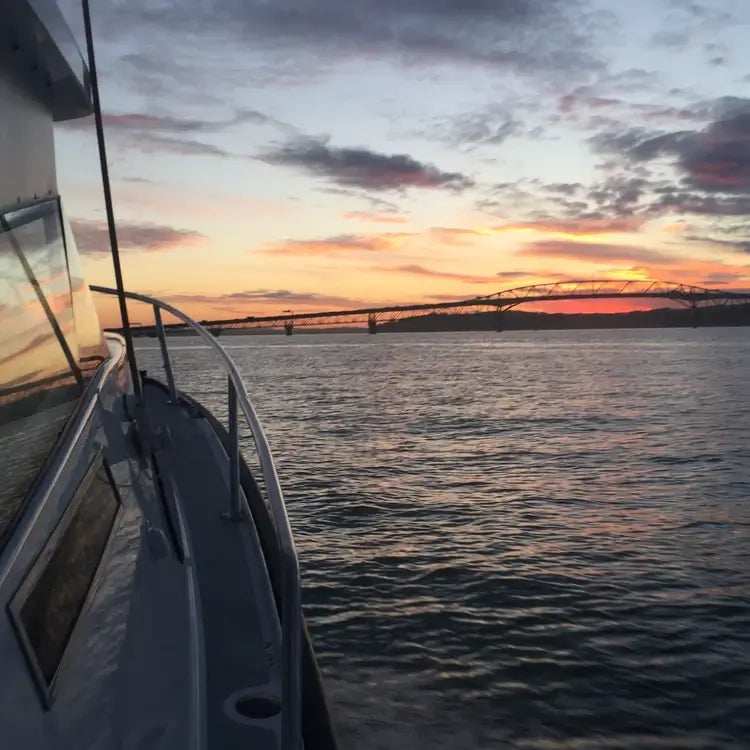
Image: reused from the Auckland Water Taxis website image library; illustrative, not a promise of a particular landing or service.